Showing posts with label Zen and the Art of Teaching. Show all posts
"The illiterate of the 21st century will not be those who cannot read and write, but those who cannot learn, unlearn, and relearn." ~Alvin Toffler
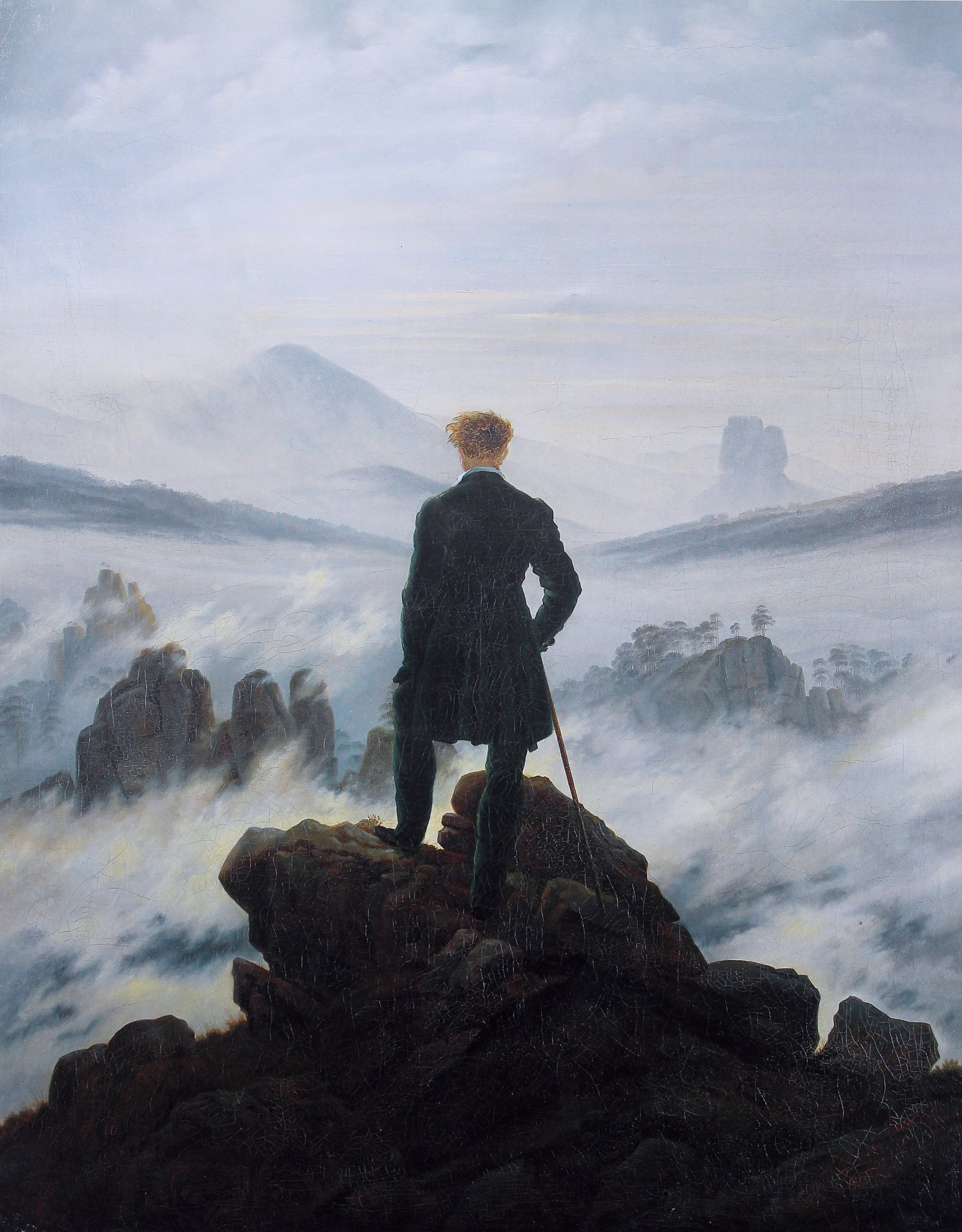
Our knowledge and understanding of the world is increasing exponentially. Barely a week goes by without a new discovery being heralded by our best and brightest. The world, or rather our perception of it, is in a constant state of flux. Yet our systems do not reflect this fact. We live in a series of 19th and 20th century systems that try to handle our 21st century realities. Those systems will fail. Some by gradual transition, others by paradigm shifts that will immediately disintegrate their necessity. We must prepare for that reality.
Our knowledge and understanding of the world is increasing exponentially. Barely a week goes by without a new discovery being heralded by our best and brightest. The world, or rather our perception of it, is in a constant state of flux. Yet our systems do not reflect this fact. We live in a series of 19th and 20th century systems that try to handle our 21st century realities. Those systems will fail. Some by gradual transition, others by paradigm shifts that will immediately disintegrate their necessity. We must prepare for that reality.
The public education system was created as a direct response to industrialization. As industry grew, a large and educated workforce was needed to fuel the fires of our nation's largest factories. The mantra at the time, and one that still permeates modern education, was 'reading, writing and arithmetic' or the "three R's". If you went to any public school in the world, chances are you're familiar with the three R's.
As Toffler suggested, the 21st century will be one where the illiterates are those who can not learn, unlearn and relearn. The most dangerous thing that can happen to someone living in the 21st century is that they believe they can stop learning. The reasoning is simple, those who do not change will be left behind.
Let's use economics as an example. Both Blockbuster and Hollywood Video were titans of the home video market. While local stores existed, these two franchises were the go to for an entire country's rental entertainment. Today, they both have closed thousands of stores and limp around, practically begging for customers. Neither anticipated the power of the internet or of streaming technologies. They relied on their 20th century knowledge while trying to operate in a 21st century world. Blockbuster and Hollywood Video were left behind, but the same thing can happen to an individual.
Quantum computing, personalized medicine, generation 4 nuclear power, 3D printing, robotics, nanotechnology, global intelligence. That's seven paradigm shifting, viewpoint-shattering developments that will happen within my lifetime. Those are the easy ones to predict. There's a host of things we do not know about that will rock our collective consciousness. What we do know is this: We must be prepared to change our minds.
The most important thing for us to do is change our approach to knowledge. It never ends. We can not stop learning. We can not believe that school is the only place where learning happens. Because of exponential growth it no longer takes a lifetime to feel out of touch, it takes a decade. In a few decades that time will shrink further, and those who can not adapt will be left behind in the span of a year. And it is those who are left behind we will deem illiterate. Too stubborn to learn, unlearn and relearn.


This is another post in my series zen and the art of teaching. You can see them all here.
The differences between a coach and a teacher are negligible. Explaining why most school athletics are coached by teachers. The main differences are subject matter, setting and student mindset. The first nobody can control. Different subjects exist for different reasons, but students are responsible for all. The next two are entirely within our control as educators and coaches. Presenting proper setting can change students perspective the same way it changes an audiences' perspective during a play. But true teaching tools can always be seen in jiu jitsu.
The differences between a coach and a teacher are negligible. Explaining why most school athletics are coached by teachers. The main differences are subject matter, setting and student mindset. The first nobody can control. Different subjects exist for different reasons, but students are responsible for all. The next two are entirely within our control as educators and coaches. Presenting proper setting can change students perspective the same way it changes an audiences' perspective during a play. But true teaching tools can always be seen in jiu jitsu.
Subjects
While we cannot control which subjects
are required for students, we can integrate them better. Let's
compare Martial Arts with a high school curriculum. Jiu jitsu is one
subject, history for example. A student can go to history and learn
facts and dates in an attempt to become a better citizen, the same
way a student can go to jiu jitsu and learn techniques to escape and
submit foes. Meanwhile, there are other students going to other
subjects: Biology, French, Economics. Taekwondo, Wrestling, Muay
Thai.
 |
| Yep, same thing. |
Schools have been playing with these
ideas for awhile. Some even do it well. We see it when students study
Ancient Greece in history while reading Homer's The Odyssey in
English. Or when an entire school adopts one policy on how a paper
should be written, and reaffirm it in every class. The problem is
these things are the bare minimum while simultaneously considered ground-breaking.
The truth is that integration often
falls by the wayside because it can not be tested. Integration
requires teacher's have a broad base of knowledge, continued
opportunities to learn and constant collaboration with their
colleagues. As budgets shrink across the nation, it is exactly these
kinds of things that are put on the back burner or disregarded
entirely.
Setting
Anyone who tells you their first time
on a jiu jitsu mat was without fear has a faulty memory or is lying.
If honest with ourselves, we can admit the same thing about going to
school. Maybe for you it was the first day in high school, or when
you moved in fourth grade and had no friends. The difference between
jiu jitsu and school is that on the mat there is no place to hide.
There are no corners to crawl into, no "loser" table, no
rejects or misfits. There is you and everyone else, out in the open.
 |
| At the superbowl. I forgot to mention, all training happens at the superbowl. |
Why are we quiet in places of worship?
Why do we avoid eye contact on trains? Why do we sing in the shower?
Setting influences our actions. It changes how we behave, and
through that, settings change who we are. I believe the masks we
where are important in defining who we are.
If we could change the setting of
schools, then we could affect the mindset of the students. That, of
course, is the ultimate goal. The entire purpose of schooling is to
change your mindset.
Mindset
When you go to a jiu jitsu school you
are going to work. There's no way around the fact that you will need
to put out substantial effort. And the place demands that of you. You
put on a uniform (called a gi), you stretch and run to prepare your
body, you listen to an instructor intently because if you're called
on to demo something, you want to do it right. You prepare yourself
as a warrior.
Even if just remotely, or
half-heartily at first. Deep down the mind realizes that it is
gearing up for a battle. Your body has physiological responses.
Adrenaline flows, muscles relax and tighten. The mind clears. There
is no Bruce Banner Hulk-smash going on, it's subtle. And in that
subtly is great beauty.
 |
| I just thought this looked cool. |
As the mindset shifts, the ability to
learn intensifies. One university professor of mine called it
"disequilibrium." In short, the mind learns best when
slightly off balance, when it has to work for the answer. A comfort
zone is the last place you want to be when trying to learn. What
excellent teachers will do is move the entire class into a
disequilibrium moments before hitting the key point of their lesson.
While learning jiu jitsu, you are
always in disequilibrium Even the masters experience disequilibrium
(if ever overwhelmed by someone talking about jiu jitsu, just mention
the name Gracie...then view their rambling like a funny TV show). It
is precisely the constant state of disequilibrium mixed with the
warrior mindset that allows massive amount of retention.
Education is thought of the same as
watching TV. Nobody thinks about watching TV, they just do it. "This
is who I am, and I am in a high school." Rarely do students look
at class like a job, and nobody looks at classes like the humble
battlegrounds they are. Society does not talk enough about the vast
importance of an education, and those who talk the most often do too
little.
Our society's best way of influencing
what kind of citizens we are is through traditional education. But
look where we are at. We kill each other over words in books, we have
the largest prison population in the world and our politicians
greatest points of rhetoric come down to who can sleep with whom. A
change in mindset is definitely needed.


On failing aka The pleasures of
drowning
I borrowed the phrase "pleasure of
drowning" from this article on jiu jitsu. What it is talking
about is failing. A lot. Because that's what you do in jiu jitsu. You
fail. A lot. It would be utterly embarrassing if not for the fact
that everyone before you has failed just as much, and everyone above
you will continue to fail.
Our society takes failing seriously.
There's large movements that try to eliminate it entirely from the
lives of children. And for good reason, continued and constant
failure without instruction can be incredibly harmful to a person's
life. For all the random, ninth place ribbons that you or your
children have received there is an underlying reason. But failing is
not the problem, lack of instruction is.
In jiu jitsu I fail every day I go in.
Sometimes my failures are physical: inadequate flexibility or
strength. Sometimes my failures are mental: gave an opponent superior
position or lacked knowledge to execute. To shun failure though is a
mistake. Failure is a teacher without discretion. It rains on the
just and the unjust alike. It will hammer you until you die. That's
where instructors step in.
One of my favorite sparring sessions
was in my third week of training. At this point you are slightly more
advanced in jiu jitsu than a three week year old baby. The baby would
be more relaxed though. I was going against a guy roughly my size but
far more advanced, several years at least. After submitting me five
or six times, he let me run through everything I know, which took
about two minutes (witty pun here). I thanked him for going easy and
taking things slowly and his response was far more enlightened than
he probably realized, "I didn't want to demoralize you."
That's the difference between an
instructor and failure. If unchecked failure would have kept
mounting, unrelenting. But a random guy who I met five minutes
earlier knew that there was a better alternative. A combination of
failure and success, even success that was given, is a superior
instructor.
This guy was not my teacher for the
day. For the most part teachers do not train with students (called
"sparring" in boxing, "rolling" in jiu jitsu).
Teachers demonstrate something and then watch everyone, trying to
help. To roll with one student would cause a teacher to miss what
others were doing. The guy I was rolling with was my instructor.
In education we demand a lot from our
teachers. They are trained, schooled and prepared; and we expect
miracles from them. Yet they are a piece of the puzzle. Lessons come
from all places and instructors take many forms. The most common
instructors are our peers. We learn far more from engaging and
interacting with our peers than we do listening to the most
experienced person on a subject.
It is that truth jiu jitsu
demonstrates most clearly. Teachers are absolutely fantastic. Their
years of experience and guidance can guide us on paths to success.
But every single move I've ever "got" has come after
working with a peer. The training is where you will fail most often,
but it is also where you will learn the most. Through learning comes
pleasure, hence the title, the pleasures of drowning.
~~~~~~~~~
I train at Guerrilla Jiu Jitsu under
Dave Camarillo and have a degree in Social Studies. So I'm not
completely making this stuff up :)
This is the another post in my Zen and the Art of Teaching series. Check out them all here.
This can apply to a variety of
businesses. Maybe you'll notice how similar what I'm about to
describe fits the office where you work. Let me assure you, schools
have mastered the art of the soul-sucking meeting.
You know the one. It drags on and on.
You're not even sure why you came in the first place. What's going on? Is this
important? Whoever is in front speaking sure seems
to think so. In fact, they believe this is the most important meeting
on the face of the earth. As if the Lord Almighty commanded this
meeting be brought forth from oblivion to bring the idle masses to
salvation.
It's about toner cartridges.
Or teaching strategies. Or a particular
student. Or tardies, fire drills, rallies, football boosters, school
elections, math club, being too disengaged with students, being too
engaged with students, not teaching enough, teaching too much, and on
and on and on. Eons pass and ice ages come and go in the time it
takes to get through some meetings.
The worst part is that we could be
working. We could be finding our way into the Element. Creating
lessons that will actively involve our students and actually teach
them something. Perhaps, if we are lucky, inspire them to create
something of their own.
Schools (and maybe your business) need
to discover what meetings are for. They are not for hanging out,
catching up, checking in, seeing how things are going or progress
reports. There is no need to have a meeting every day, probably
unnecessary to have one every week.
What a meeting should be is a place
where individuals can gather to collaborate and share ideas. You
should go to a meeting, get something wonderful out of it that will
help you create something of your own. Regurgitation of a process is
simple. Every animal species can walk in a line. Humans are so
advanced we invented email. If all a manager wants done is for his
drones to follow an order- send an email.
Here are my rules for meetings, when I
am in charge.
1. Cancel it. Honestly, is this meeting necessary? Will every single individual get something out of it that will improve their lives and their students lives? If the answer is no, cancel the meeting. If the answer is yes, move on.
2. Never longer than a half an hour. Ever hear someone say, "Kids attention spans are so short nowadays." It's not nowadays and it's not kids. The absolutely maximum a mind can stay focused on a single task is 45-50 minutes. But that takes a lot of interesting things, active involvement and communication. Most likely, a mind can handle closer to 15 minutes. Fifteen minutes is the perfect length of a meeting. Assemble the troops, hand out papers, expect them to read the papers another time (don't go over information twice), say something inspiring and let them do the job you hired them for.
3. Inspire. Make it so meetings aren't necessary. The best manager should make themselves obsolete. The best teachers should fade into the background. People want to work and think and create all on their own. Inspire them to do that.
Here are my rules for meetings when I
am in attendance.
1. Don't go. It's a waste of your time. Inform your superiors beforehand. Make it clear to them you don't do meetings. They are a drain on your energy, your time and they prevent you from reaching the Element.
2. Seriously. Read number one.
3. If you must go, do your best to be open to inspiration. Chances are it won't happen. Whoever is in charge is probably wasting everyone's time with idle chatter. However, you can at least, for a moment, attempt to be open. If you can't make it through three hours of being open to inspiration then try small segments. But seriously, read number one.
Send emails, use IMs, set up a Skype
account. You know what all of those things have in common? You can
turn them off whenever you want. You have a choice about when you are
going to work individually or collaboratively. Unlike when meetings
are forced upon you, choice is present. Companies/schools that block
websites to improve worker productivity are stupid. Let your
employees go on Facebook and Twitter. Let them search the web for
Gnostic Christianity and sites on Anarchy. They may be inspired to
create something wonderful for your company. Or teach a child
something that will change his/her life.
Block meetings though. I'm all for
blocking meetings.
*With inspiration from Leo Babauta.
This is the another post in my Zen and the Art of Teaching series. Check out them all here.
Every teacher approaches things in a different fashion. I don't mean to be all-encompassing and over-generalizing. This is how I feel, but I believe it's how a great number of people feel as well. This is partly to let you know you're not alone, and partly to remind myself that neither am I.
Every teacher approaches things in a different fashion. I don't mean to be all-encompassing and over-generalizing. This is how I feel, but I believe it's how a great number of people feel as well. This is partly to let you know you're not alone, and partly to remind myself that neither am I.
Teachers don't care about a student’s grade.
They care what a student learns, they care if a student is better educated when they leave the classroom, and they care about a student's health and well-being. None of that has anything to do with a student's grade. Which is why it is so easy to cheat for students.
If day in and day out a teacher sees how a student behaves and works, they know if a student is getting the material or not. Then test time comes around and the kid does terribly. We know he is smart, we know he is capable, we know he understands the material. So why not bump him from a D to a C?
People's gut reaction is, "That's unfair. It is giving special treatment to a small group of students."
Life's not fair. People, teachers included, know this instinctively. We know people get treated differently, we see it all the time in our work or professional lives. There is little, if anything, fair about the world. So fairness isn't a priority in our mind.
To add insult to injury, we know everything is a little silly. The only teacher's who believe their material, tests, homework is important to a student's livelihood are the ones who take themselves too seriously. I do not take myself seriously.
I don't mean to imply that I'm not a professional or not serious about my students’ education. I am both. That doesn't mean I take myself seriously. I was a class clown in high school, rarely did homework, and aced most tests. Years after high school, I turned out alright.
Here's the truth. Adults don't know what they are doing. We are just as lost and confused as teenagers. There is no moment of revelation that comes bestowing adults with untold knowledge; unlocking the mysteries of the universe. Adults make just as many mistakes, if not more, than teens; most likely, because we have more decisions to make than teenagers.
The difference is that some adults forget how dumb they really are. They come to believe that because they've been doing one thing a certain way for 15, 20, or 50 years that now they know something about life. They do not. We do not. I do not.
This is why when true innovators come along, people who actually perceive the world differently than everyone else, we are blown away. Steve Jobs, Gandhi, Einstein, Nikola Tesla, Jesus Christ. All of them blew us away with their views on life, their tenacity, their innovative way of looking at mankind. By this comparison, I only mean to point out the inherit ability of different individuals to change the world simply by having a different outlook.
Those people are the exception, not the rule for adults. Most are followers, nothing more than mindless sheep that wake up and do the same thing every single day. When a person begins to realize how silly everything is, they can not take themselves seriously. They know that a test is not a reflection of a student's intelligence, not a measurement of how they will do in life and not anything more than an inadequate tool that has been used for far too long.
I've been flying high and optimistic on
my last few posts in Zen and the Art of Teaching. You can see them
here.
Here's a little dose of realism that
nobody tells you while you're in college, that you don't understand
when you're in high school, and maybe nobody is brave enough to talk
about when you're an adult.
Eventually, you have to watch your kids
fail. You have to watch them get hurt. You have to see them cry. You
have to listen as they tell you horror stories about what happens to
them outside of school. Eventually, you have to watch some of them
die.
I believe every person handles these
things a little differently, but I know for a fact no one is prepared
for them. How can someone be prepared for a child you see all the
time to tell you they're being assaulted at home?
There is no way to prepare. So instead
we don't talk about it. No professor tells you in that intro
education class that eventually you'll have to deal with horrible,
terrible things happening to your students. To your kids.
I'm not a parent. I don't make any
claim to know what a parent feels like when something bad happens to
their child. But I can tell you that outside of their parents, I
interact with these kids more than any other adult. In the cases
where students despise what's happening to them at home, I interact
with them more than their "parents."
And it hurts like hell when something
bad happens to one of my kids.
I've already talked about the fact that
I am in a protector/rescuer by nature. That's just my instinct. I
want to help people in need. A past girlfriend of mine liked to refer
to the scene from The Blind Side when Leann Tuhoy is talking about
how high Michael Oher scored in protective instincts on an aptitude
test. This is partly because if I'd ever taken a test like that I
would have scored similarly to Oher, and partly because my past
girlfriend was a fan of mediocre sports movies.
Nobody talks about these things though.
Beyond the petty high school drama that gets joked about so often,
there are real, serious issues going on in our schools. I see some
people trying to do what they can to help those who have it the
worst. At the end of the day though, there is simply not enough being
done.
Why aren't we talking about these
things?
This is the second post in my Zen and
the Art of Teaching series. Check out the first post here.
I'm going to do two things in this
post. First, I will tell you exactly how I wish I could set up my
classroom and interact with my students. Then I'll tell you why that
is so difficult to achieve.
Currently, our schools work in a
strange way. Kids are supposed to "learn" new material from
a teacher at school. They are then sent home and given homework which
is supposed to reinforce what they learned during the day. This is
100% the opposite of how I think things should work.
Here's what I would do. Instead of
forcing kids to learn new material at school we should send them home
with a podcast or assignment to research a new topic using the
internet. Wikipedia pages should be used often. All new material
should be learned away from school.
 |
| So you don't get kids looking like this. |
Why? You ask. Two main reasons. First,
this is exactly how the rest of us get information. If you want to
learn something new isn't your first stop Google or Wikipedia? "Oh,
I just heard about an anaconda. I have no idea what an anaconda is."
When was the last time you followed that by saying, "I'll go to
school to figure out what an anaconda is."
Schools aren't needed in that regard
anymore. They are not the source of knowledge. The internet has more
information on it than you could ever learn at school, regardless, of
how long you spent there. The teachers in the world can not give you
1/1000th the information that the internet contains on any given
topic.
So why do we treat young adults
differently? Mainly because that's the way it's always been done.
That was necessary. You did actually need a physical location to go
to where someone could teach you things. But that's not the case
anymore. Today, information exists and is available to our students
at the touch of a button, literally.
What do the kids do at school then?
 |
| Pictured: The actual button for information. |
Schools become the place where students
reinforce the knowledge. Where they go to trained professionals who
have extensively studied the subject area and know ingenuitive ways
to help students incorporate it into their lives. Students go to
school to make sense of the details, to add that layer of understanding that is necessary for true learning to take place. They go to school to ask questions instead of be told
facts.
That would be the first phase of how I
would teach in a perfect world. Reversing the manner in which we
absorb and retain information. The second phase would involve
interacting with students in every medium possible. I think Twitter
could be one of the greatest tools for connecting individuals. As
students are listening to a podcast or reading pages on Wikipedia
they can @mention or hastag their classmates, teachers, even people
from outside resources like National Geographic or Apple.
All this is possible with today's
technology and yet, I often see a backlash to innovation in the
classroom. Which brings me to...
The Challenges
I work at school that has a no
electronics policy. Not a "no phones in class" or a "no
ipods in the hall" policy. Any personal electronic is banned
from anywhere on school.
Is this policy followed? Nope. It does
not reflect the world we currently live in. It reflects a world some
people are trying to hold on to. A world where students came to
school and had no distractions and were perfect little angels. A
world which never existed.
 |
| Voldermort held on to that world too. |
Solution
Here's my two cents. It's idealistic
and unrealistic, but I'm young and can still afford to be both.
Besides, it's not like anyone in charge is pushing anything that great.
I want education to be treated like the
military. I want companies to compete for lucrative contracts to
provide the most cutting-edge equipment to our schools. I want the
best of the best to be given to our students not once in awhile, but
every single day. The most highly skilled people working should ALWAYS be the young because they've had years of hands on experience with the latest technology. This would insure that future innovations are continually being sought after by the people who, statistically speaking, will be around the longest.
I realize how silly that may sound to
some. I also know that there are people who read this and
agree. I leave you with a quote from the TV show The West Wing that
more articulately sums up my position:
"Education is the silver bullet. Education is everything. We don't need little changes, we need gigantic, monumental changes. Schools should be palaces. The competition for the best teachers should be fierce. They should be making six-figure salaries. Schools should be incredibly expensive for government and absolutely free of charge to its citizens, just like national defense. That's my position. I just haven't figured out how to do it yet." -Sam Seaborn, The West Wing (S1E18)